 By David Luis
Verdict: Recommended
Initiation Fee: Reported $80,000–$120,000 (post-renovation reports)
Est. All-In Annual Cost: ~$10,000–$16,000 plus minimums
Best For: Fort Worth professionals who want championship history with a working social club attached
Avoid If: You dislike tournament-week disruption or sponsor-driven admissions
Last Reviewed: 2026-10-11
Walk past the Wall of Champions and you’re reading golf history in bronze. This Colonial Country Club review covers the private club in Fort Worth, Texas — Ben Hogan’s home club, host of the PGA Tour’s Charles Schwab Challenge, and home to a Gil Hanse restoration reported at $20 million. My verdict up front: the renovation turned a proud old club into the best version of itself in 80 years, and the 2026 tournament, the third on the restored course, confirmed the golf still holds up: Russell Henley beat Eric Cole in a sudden-death playoff at 12 under.
Colonial is the rare club where the tournament, the history, and the membership all still point the same direction.
Club Overview
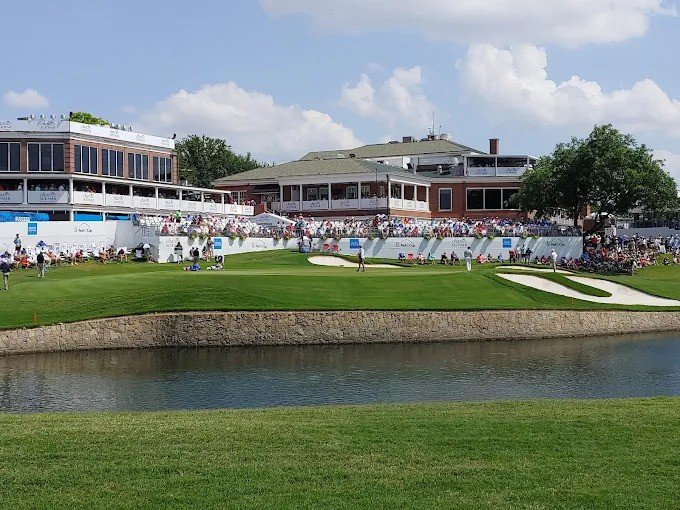
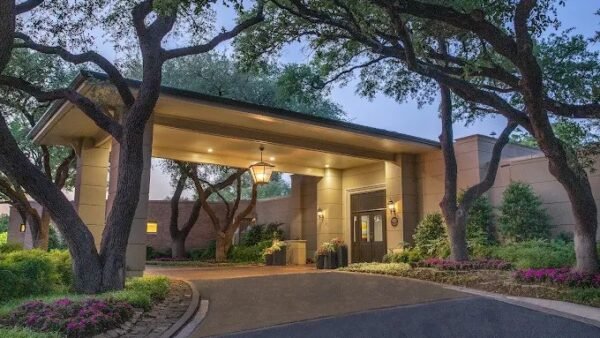
Image: Colonial Country Club.
Marvin Leonard built Colonial in 1936 to prove bentgrass greens could survive Texas — then talked the USGA into bringing the 1941 U.S. Open south. Ben Hogan won here five times, which is why Fort Worth’s claim to “Hogan’s Alley” outranks Riviera’s. The Charles Schwab Challenge has run here since 1946 — the longest-running PGA Tour event held at the same venue.
| Club Type | Private Country Club (member-owned) |
|---|---|
| Location | Fort Worth, Texas |
| Founded | 1936 |
| Membership Categories | Full Golf, plus sports/social tiers |
| Initiation Fee | Reported $80,000–$100,000; member forum reports cited a planned rise toward $120,000 post-renovation |
| Monthly Dues | Reported ~$500–$600 |
| Waitlist | Sponsorship required (number of sponsors not published); demand reportedly rose after the renovation |
| Membership Cap | Charter cap of 700 members as reported in 2009; current figure not published |
| Golf | 18 holes, par 70, roughly 7,200-plus yards from the Tour tees; 1936 John Bredemus/Perry Maxwell lineage, restored by Gil Hanse (2023–24) |
| Other Amenities | Clubhouse dining, pool, fitness, racquet sports, tournament traditions |
| Dress Code | Traditional club attire |
| Official Website | colonialfw.com |
Membership Costs & Fees
Colonial keeps rates private, but the paper trail is better than most clubs’:
- Initiation: reporting around the club puts it at $80,000–$100,000; a 2022 member-forum thread described full membership at $80,000 with a planned increase toward $120,000 tied to the renovation.
- Monthly dues: reported around $500–$600 — modest for a venue of this caliber.
- The renovation surcharge reality: a project reported at $20 million (the Dallas Morning News later put the makeover at $25 million) doesn’t fund itself; expect capital components and assessments in the fine print. Ask directly how the Hanse work was financed.
- Ongoing extras: food minimums, cart/caddie spend, and tournament-week hospitality options.
All figures are attributed reports as of 2026, not published rates. Fort Worth talks; the club confirms only through membership channels.
How Old Are the Numbers Everyone Quotes?
Older than the renovation. A September 2009 Fort Worth Weekly feature reported an $80,000 initiation fee and $470 monthly dues, with the charter capping membership at 700. The same piece described a resale buyout of 30 percent of the initiation fee (cut from 40 percent during the 1980s downturn), an option in the 1990s to pay the fee over ten years instead of two, and a board that in 2009 chose to stretch payment terms rather than cut the fee. Today’s $80,000 figure on third-party listings is therefore a 17-year-old data point repeated, and the climb toward $120,000 rests on a single 2022 forum thread.
If both the 2009 dues and today’s $500–$600 reports are right, dues moved only about 6 to 28 percent in 17 years, a small change for a club that just rebuilt its course. My inference, not a fact: either the older figure was stale or the capital cost is landing in assessments rather than dues, which is why the renovation bullet above matters. None of this is a current price, and I could not find any current terms, payment plans or buyout rules. Colonial also does not appear as a 501(c)(7) filer in the Form 990 data behind our initiation fee guide, so there is no public financial statement to check either.
We compare these figures against every club we have reviewed in why American clubs hide their initiation fees.
This club sits inside the broader picture set out in the break-even round count.
Read the private club application process for how this compares across the clubs in our database.
How to Join
Sponsorship by members, application, committee review — the classic Texas process. Post-renovation demand reportedly tightened admissions and firmed pricing. The realistic path: build genuine relationships with members and be patient through a cycle or two.
Amenities: The Full Tour
Golf
Gil Hanse’s 2023–24 restoration is the story. Working from 1941 U.S. Open photographs, Hanse’s team rebuilt every green with modern agronomy — new grass, drainage, irrigation, and a hydronic green-cooling system — in under a year, a timeline the PGA Tour called “the renovation that couldn’t fail.” The course reopened for the 2024 Schwab Challenge on schedule.
The routing is largely unchanged: reporting on the project says holes 13 and 18 received brand-new greens and that new barranca-style bunkers were added, with the course re-sodded in the same bentgrass. Players were split at first. Scottie Scheffler said the new greens were a bit mounded and make the ball behave oddly, while Michael Block liked seeing the original green shapes restored. Par is 70 at a little over 7,200 yards for the Tour event, with narrow fairways that reward position over power.
The Horrible Horseshoe — holes 3 through 5 — remains the toughest stretch in Texas golf, now with firm-and-fast conditions the bentgrass era never allowed.
Clubhouse & Tournament Infrastructure
The clubhouse wears its history: the Wall of Champions, Hogan memorabilia, and rooms built for tournament week. Members effectively co-own a PGA Tour event’s traditions. The 2026 edition ended on Sunday, May 31 with Henley’s playoff win, a $9.9 million purse and a $1,782,000 winner’s check, which shows the scale of the week members host every spring.
Beyond Golf
Pool, fitness, and racquet facilities serve members well, though the club’s center of gravity is unmistakably golf and the social life around it.
Dining & Social Calendar
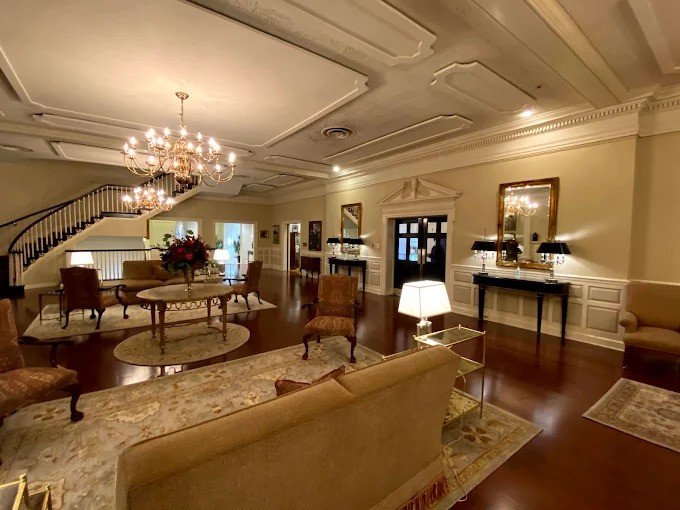
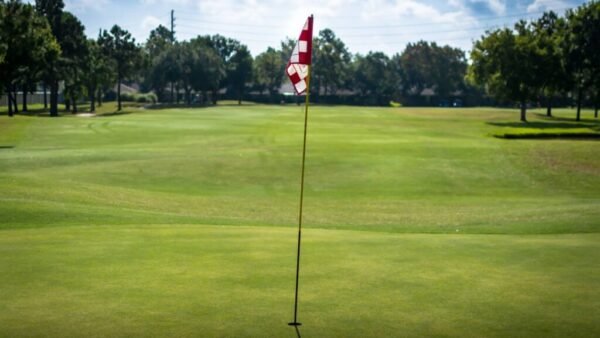
Image: Colonial Country Club.
Dining runs traditional Fort Worth — strong grills, busy weekend rooms. The calendar orbits May: tournament week turns members into hosts, with hospitality privileges most clubs can’t offer at any price.
Family & Kids
Junior golf is strong and pool season anchors families, but Colonial reads more adult-professional than kid-resort. Families who want camps-and-waterslides energy should look at Dallas’s volume clubs instead.
Guest Policies & Reciprocal Clubs
Member-hosted guest play with standard fees; a Colonial invite carries weight across Texas golf. Formal reciprocity isn’t published, though the club’s tournament stature opens doors informally everywhere.
Culture, Dress Code & Vibe
Fort Worth establishment: oil, law, medicine, and multi-generation families, prouder of Hogan than of any modern flash. Traditional dress standards, first names in the grill, and a deep identity as the club west of Dallas. It’s confident, not showy — very Fort Worth.
What Members Actually Say
The consistent praise: on TexAgs’s Fort Worth club threads, Colonial is the consensus crown jewel — especially post-Hanse, with members calling conditions the best in club history.
The consistent complaint: tournament season — course closure, crowds, and parking define May, and not every member loves hosting a Tour stop.
The surprise: dues reported near $500–$600 monthly are lower than many far lesser Texas clubs; the initiation is where Colonial charges for the name.
What I Liked
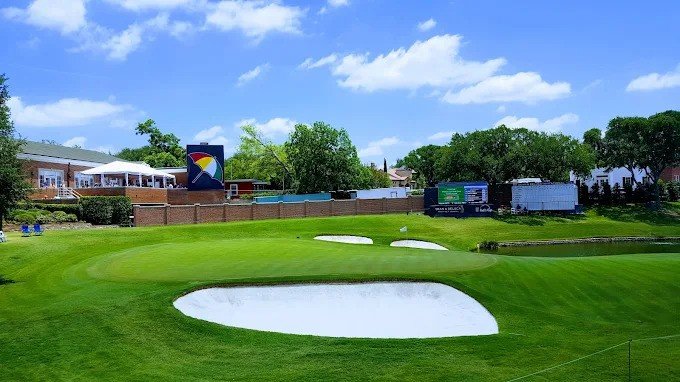
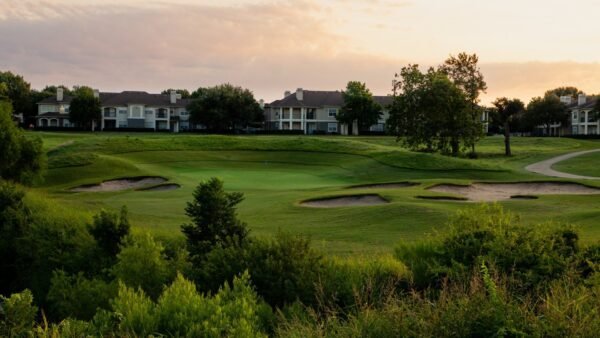
Image: Colonial Country Club.
- The Hanse restoration — 1941 character with 2026 agronomy, delivered in 11 months.
- Five-time Hogan history and the strongest “Hogan’s Alley” claim in golf.
- Longest-running same-site PGA Tour event; members inherit the traditions.
- Reported monthly dues are a relative bargain for the caliber.
- Member-owned governance: your initiation buys a seat in a member-run club, though the 2009 reporting described only a 30 percent resale buyout, not a full refund.
What I Didn’t Like
- Initiation reportedly climbing toward $120,000 post-renovation.
- Tournament week disrupts a full month of member life.
- Sponsor-driven admissions move at Fort Worth’s pace, not yours.
- More adult-clubby than family-resort — know which you want.
Is It Worth It?
As an illustration, not a club rate: say $100,000 in, $600 monthly, plus minimums — call it $11,000 a year to carry. A member playing weekly pays roughly $210 a round on carry costs to belong to a Tour venue in tournament condition year-round. Against what US Open-tier memberships cost elsewhere — see Oakmont — Colonial reads like value. For Dallas-side alternatives, Brook Hollow is the old-money comparison.
Who Is This Club For?
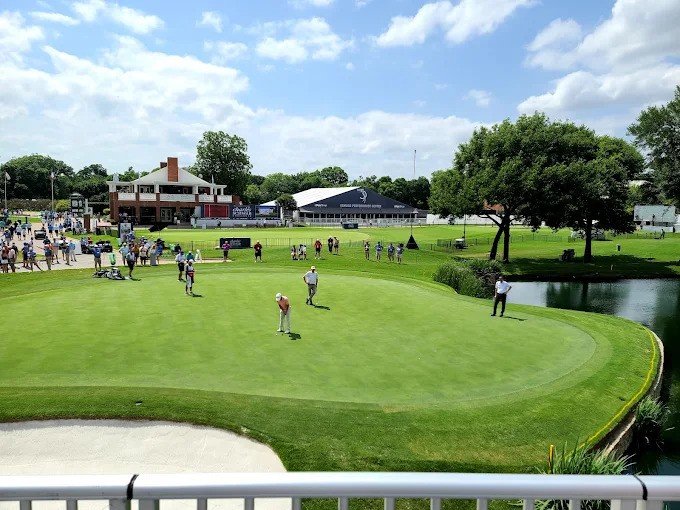
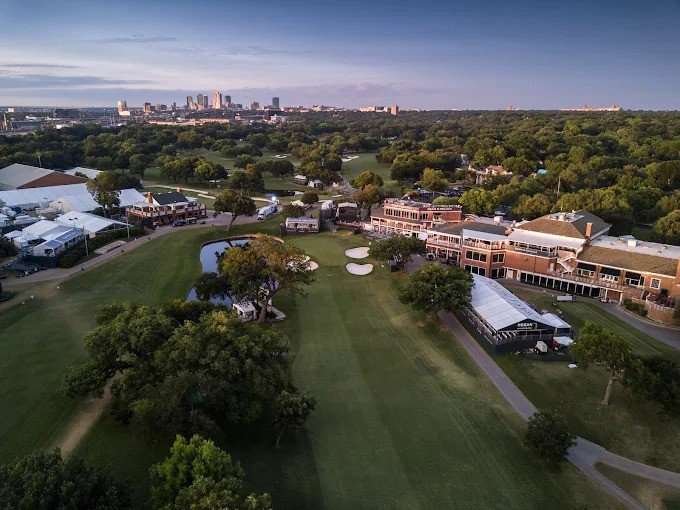
Image: Colonial Country Club.
This club fits Fort Worth professionals and golf-history devotees — you’re buying Hogan’s locker room with modern greens.
It fits players who want tournament-grade conditioning without tournament-grade dues.
Skip it if May disruption would sour you, or if your family’s ideal club is a waterpark with fairways. Colonial knows exactly what it is.
People Also Ask
How much does Colonial Country Club membership cost?
Reports put initiation at $80,000–$100,000, with member-forum accounts describing a planned rise toward $120,000 after the renovation. Monthly dues are reported near $500–$600. The club doesn’t publish rates, and the $80,000 figure traces back to a 2009 report, so treat all figures as sourced estimates and confirm current terms with the membership office.
What did the Colonial renovation change?
Gil Hanse’s restoration, reported at $20 million (the Dallas Morning News later cited $25 million) and run from the end of the 2023 tournament to spring 2024, rebuilt all greens using 1941 U.S. Open photographs, adding new grass, drainage, irrigation, and a hydronic green-cooling system. The course reopened on time for the 2024 Charles Schwab Challenge.
Why is Colonial called Hogan’s Alley?
Ben Hogan won five Colonial titles and made the club his home for decades, so Fort Worth claims the “Hogan’s Alley” nickname — as does Riviera, where Hogan won the 1948 U.S. Open. Colonial’s five wins give it the stronger claim.
Can the public play Colonial Country Club?
No. Colonial is fully private; access requires a member host. The public sees the course during the Charles Schwab Challenge each May — the PGA Tour’s longest-running event at a single venue, played at Colonial since 1946.
Who designed Colonial Country Club?
Marvin Leonard built Colonial in 1936 with architects John Bredemus and Perry Maxwell shaping the original course. Gil Hanse led the 2023–24 restoration, deliberately returning the course to its 1941 U.S. Open character.
How many members does Colonial have?
The club does not publish a current count. A 2009 Fort Worth Weekly report said the charter capped membership at 700, and the same article described a waiting list of members trying to exit the roll. Ask the membership office whether the cap still applies.
Who won the 2026 Charles Schwab Challenge at Colonial?
Russell Henley won the 2026 event, beating Eric Cole in a sudden-death playoff after both finished at 12 under. It was Henley’s sixth PGA Tour title and the third tournament played on the Hanse-restored course.
Verdict & Score
GCR Score: 4.7 / 5 — Recommended. Championship history, member equity, restored-to-glory golf, and dues that undercut its stature. Tournament-month chaos and a six-figure entry are the honest costs. See how it stacks up in our country club reviews.
Last reviewed: October 11, 2026.
Ranked #1 in our Best Golf Clubs in Texas — see how it compares with the rest of the top 15.
Author Note
I grew up on stories of Hogan’s 1-irons, and I still grade clubs on whether the golf justifies the legend. Colonial, post-Hanse, finally does again.