 By David Luis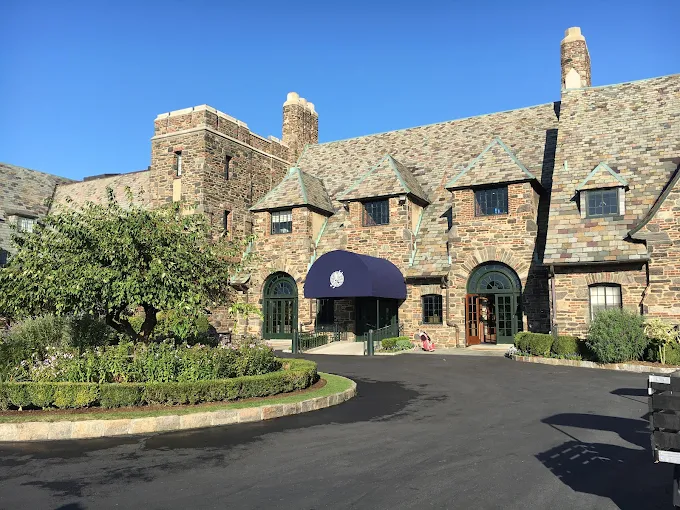
⭐ GCR Score: 4.9 / 5
Verdict: The Gold Standard of American Private Golf
Best For: Golfers who want the most challenging, historically significant private golf experience in the US
Avoid If: You need any form of public access — the waitlist is 10 years and the process is strictly invitation-only
Last Reviewed: October 4, 2026
Jack Nicklaus once called Winged Foot’s greens “the most difficult set I’ve ever seen.” Phil Mickelson’s career nearly ended on the 18th hole here. And when Bryson DeChambeau won the 2020 US Open hitting only 41% of fairways, golf’s purists nearly rioted.
That’s Winged Foot Golf Club. It doesn’t just host history — it makes it, on nearly every major occasion it opens its gates.
What does Winged Foot membership cost? The club publishes no fee schedule. Reported figures put the initiation fee at $150,000 to $200,000 and annual dues at about $15,000 to $20,000, behind a waitlist of roughly ten years and a requirement for two member sponsors. The club has not confirmed any of it, so treat these as a planning range and not a quote.
Here’s my complete Winged Foot Golf Club review — what the West and East courses are actually like, who the members are, what the 2028 US Open means with it now under two years away, and the one historical fact that changed the English language of golf.
Winged Foot Golf Club — Quick Facts
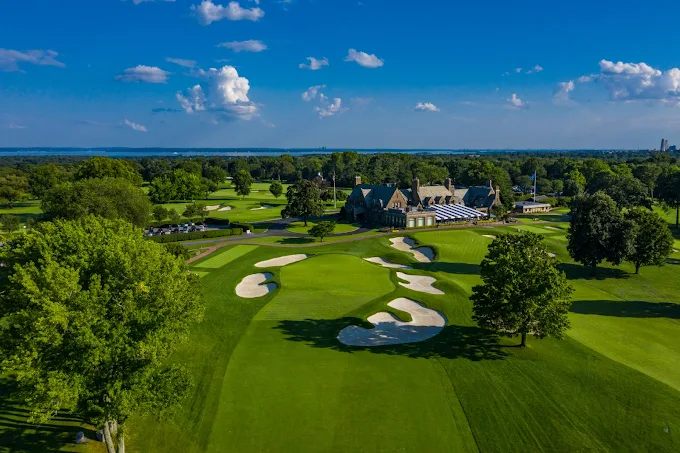
Image: winged foot golf club
| Club Type | Private Golf Club (invitation only) |
| Location | 851 Fenimore Road, Mamaroneck, NY 10543 |
| Phone | (914) 698-8400 |
| Founded | 1921 (incorporated); courses opened June 1923 |
| Designer | A.W. Tillinghast (1923); Gil Hanse and Jim Wagner restorations (West 2018, East 2020) |
| Courses | 36 holes: West Course + East Course |
| West Course | Par 72, roughly 7,430 to 7,480 yards depending on the source; Rating 76.4 / Slope 140 |
| East Course | Par 72, 6,808 yards; Rating 73.6 / Slope 140 |
| US Opens Hosted | 6 (2028 will be the 7th) |
| Other Championships | 1997 PGA Championship; 2 US Women’s Opens; 2 US Amateurs; 1 US Senior Open |
| Estimated Initiation Fee | ~$150,000–$200,000 (not publicly disclosed) |
| Estimated Annual Dues | ~$15,000–$20,000/year |
| National Designation | National Historic Landmark (December 2024) |
| Waitlist | Approximately 10 years |
| Playing Style | Walking only — mandatory caddies |
| Best Time to Play | May–June and September–October |
| Official Website | wfgc.org |
The Word “Mulligan” Was Invented Here
Before we get to the courses, this deserves its own section.
David Mulligan was a hotel executive and Winged Foot member in the 1920s. He would rush from Manhattan without warming up, tee off badly, and then ask for a second shot. His playing partners started calling it “a Mulligan.”
That’s the origin of one of golf’s most universal terms. It was born on the first tee at Winged Foot. This detail appears in almost no competitor review of this club — and it’s the kind of fact that reveals everything about the place.
What I Liked — The Pros
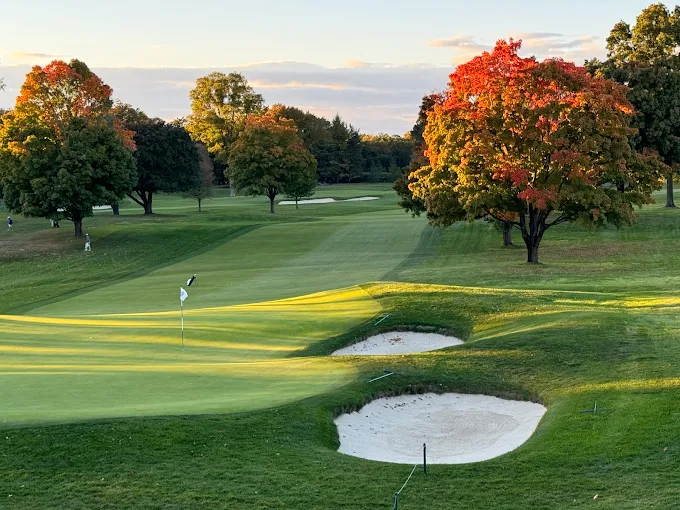
Image: winged foot golf club
- The West Course greens are unlike anything else in golf. Eighteen completely unique putting surfaces. Jack Nicklaus called them the most difficult he’d ever seen. They tilt front-to-back, contain hidden ridges and false fronts, and reward only those who approach from the correct side of the fairway. Playing them well requires days, not hours.
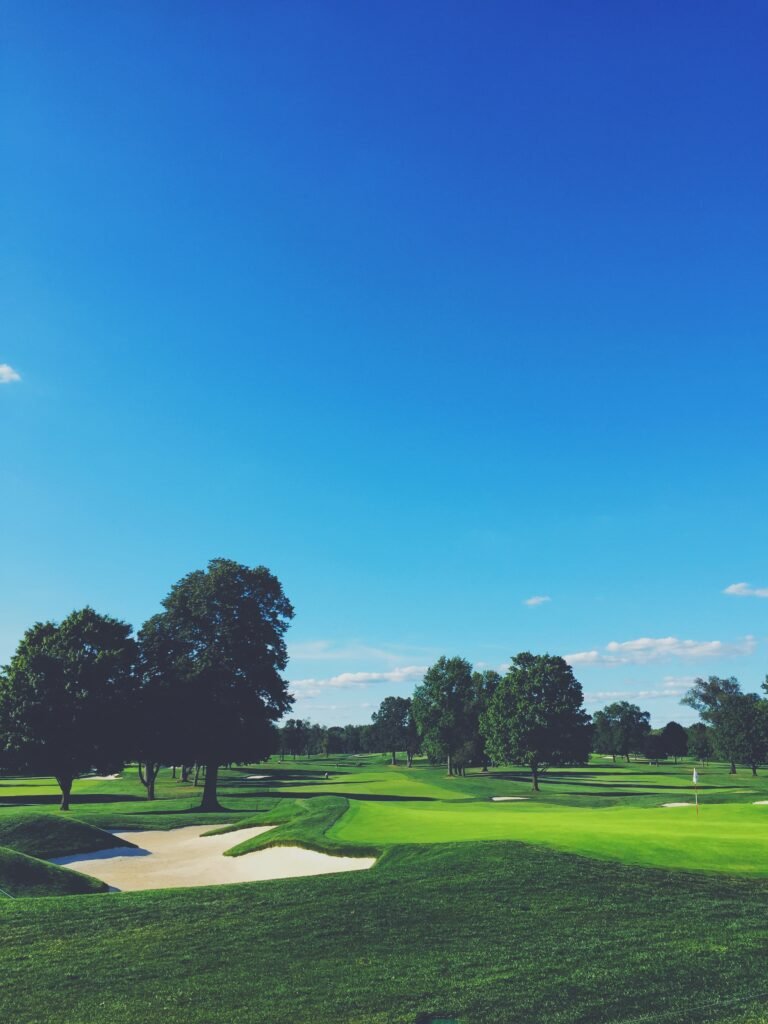
- The East Course is an underrated gem. At 6,808 yards it’s shorter, yet it carries the same 140 slope as the West, so it plays harder than the yardage suggests. Members often prefer it for the variety and character. Almost no outside review gives it proper attention.
- The 2028 US Open makes right now the best time to play the West Course. Gil Hanse’s restoration of the West Course, completed in 2018, put the course in the best shape of its modern history. Greens were expanded to reclaim Tillinghast’s original dimensions, and Sub-Air technology manages moisture year-round. This is the course at its finest before tournament infrastructure starts to disrupt member access.
- The membership culture is unexpectedly welcoming. For a club with a $150,000–$200,000 initiation fee, Winged Foot members are consistently described as down-to-earth, focused on golf, and approachable. No private jet posturing. Just people who love serious golf.
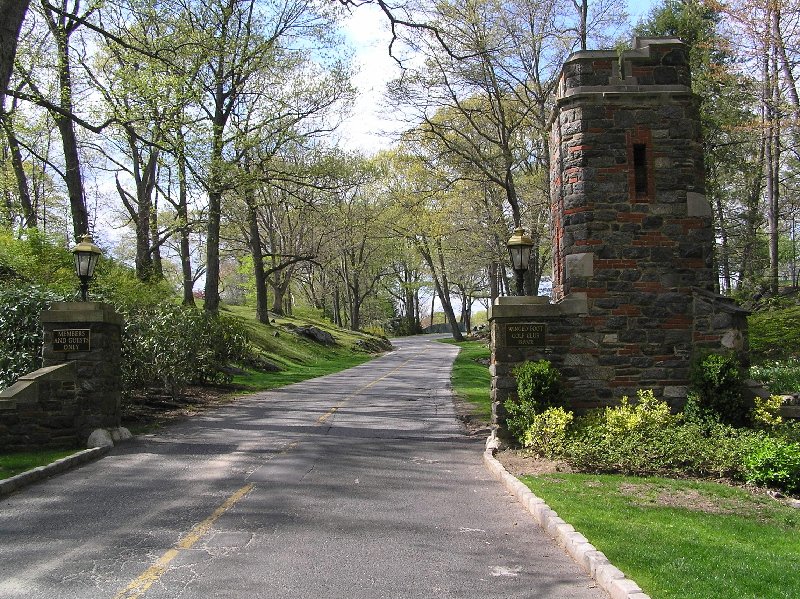
- National Historic Landmark designation (December 2024). The USGA, the NPS, and the Department of the Interior officially recognized Tillinghast’s design and Wendehack’s 1925 Jacobethan Revival clubhouse as a national landmark. This happened just months ago — most reviews haven’t caught up.
- The tee time system is genuinely old-school. No advance reservations. Members place a ball by the tee marker when their group arrives. Ball position determines play order. Four-hour pace is standard. It’s the kind of system that sounds chaotic and works beautifully.
- 189 members carry a handicap below 5. This is probably the highest concentration of single-digit golfers at any private club in the US. You’re surrounded by people who take the game as seriously as the courses demand.
What I Didn’t Like — The Cons
- A 10-year waitlist and $150,000–$200,000 initiation fee. Getting to Winged Foot requires two member sponsors, years of relationship-building, and then a decade of waiting. For most golfers, this is a dream that stays a dream.
- The West Course will destroy your ego if you’re not prepared. Nine of the twelve par-4s exceed 450 yards. The final five holes are exclusively par-4s — no birdie chances. Wrong side of the green on any hole means a likely 3-putt. Casual golfers will not enjoy this course.
- The driving range is a weak point. Golf Digest has noted it may be “the worst driving range of any of the best clubs” — a genuine gap in an otherwise exceptional facility.
- No advance tee times create planning uncertainty for guests. Members love the system. Guests visiting for a specific time window may find it frustrating.
- Phone restrictions are strict. Photography is limited to common areas. On the course, phones stay away. Modern golfers who document their rounds will need to adjust expectations.
- 2028 US Open preparations will disrupt member access. Hosting a US Open effectively turns the club into a construction site for months before the event. Members navigated this in 2020 — and they’ll do it again. It’s worth knowing before committing.
West Course Signature Holes
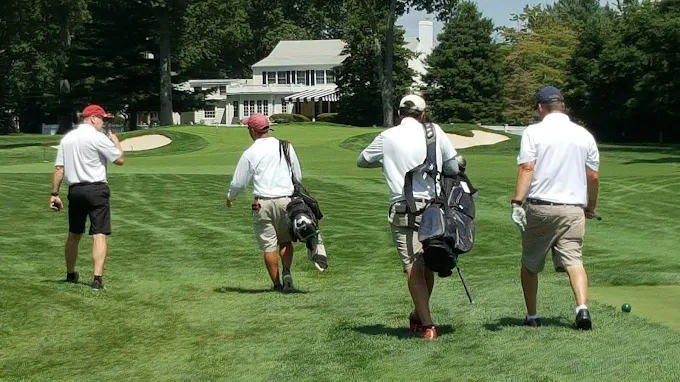
Image: winged foot golf club
| Hole | Par | Yards | What Makes It Memorable |
|---|---|---|---|
| No. 10 “Pulpit” | 3 | 190 | Tillinghast called it the best par-3 he ever designed. Elevated, hidden green. Ben Hogan described the shot as hitting “a 3-iron into some guy’s bedroom window.” Four bunkers. No easy par. |
| No. 3 “Pinnacle” | 3 | 243 | A ridge divides the green in two. False front complications. Billy Casper laid up here in the 1959 US Open — and it worked. Every other player thought he was insane. |
| No. 6 “El” | 4 | 321 | Driveable par-4 with a creek hazard and an L-shaped green that wraps around a right bunker. Risk-reward at its most tempting. |
| No. 18 “Revelations” | 4 | 452 | Widely called the greatest inland finishing hole in the world. Massive false front. Uphill approach. Phil Mickelson’s 2006 collapse happened here — double bogey, championship lost. The hole that ends careers and defines reputations. |
East Course — The Member’s Secret
Ask a Winged Foot member which course they prefer for a casual afternoon round. Many will say the East.
The East hasn’t hosted a major since 1980, which means it’s received less attention and fewer course modifications over the decades. Gil Hanse and Jim Wagner restored it too. Wikipedia dates the East Course work to 2020, two years after the West.
On slope the two courses are level. Both carry a 140, with the East rated 73.6 against the West’s 76.4 from the championship tees. The West is the longer, harder test, but the gap is smaller than the yardage suggests. The variety of hole designs, the natural rock settings, and the character of holes like the 13th (four bunker fingers climbing a bank with a hard sloping green) give it a depth that rewards repeat play.
Playing only the West when visiting Winged Foot is like reading half a great novel.
Facilities & Amenities
- 36 holes of championship golf — West and East, both Tillinghast, both restored by Gil Hanse.
- 1925 Jacobethan Revival clubhouse — National Historic Landmark; original 1923 metal lockers still in service.
- Walking only — no golf carts; caddies mandatory.
- World-class pro shop — described by visitors as possibly the best-stocked anywhere in the world.
- Men’s Grillroom and fine dining restaurant.
- Swimming pool complex — major $70M investment included full rebuild; 75 chaises, Pool House with Grille and Bar.
- Tennis courts and fitness center.
- Bobby Jones’ 1929 US Open scorecard displayed in the clubhouse.
The 2028 US Open — What It Means Right Now
The USGA announced the 2028 US Open at Winged Foot’s West Course on January 9, 2023, following the 2020 staging. It will be the 7th US Open at Winged Foot, level with Baltusrol and behind only Oakmont, which hosted its tenth in 2025.
One detail changes the picture. The 2020 US Open was played without spectators because of the pandemic, so 2028 will be the first US Open at Winged Foot with ticketed crowds. Grandstands, hospitality tents and parking at that scale are what members will live with, and what a prospective member should weigh.
For prospective members and current members alike, 2028 means two things:
- The course is currently at its peak. The Hanse restoration is complete, Sub-Air technology is operational and the greens are back to Tillinghast’s dimensions. The access window before tournament preparations narrow is now.
- Expect restricted member access in the run-up to 2028. I have not found a published closure calendar, so the timing is my inference from how 2020 worked. A US Open needs months of preparation, infrastructure installation and practice rounds, and each limits member play. It’s not a deal-breaker, but it’s a real factor.
“Only Fuzzy Zoeller and Greg Norman have ever broken par at Winged Foot across all six previous US Opens.”
— USGA / US Open Record
Membership & Fees
Winged Foot does not publish official membership fees, so every figure here is reported or estimated. A Golf.com membership explainer cites an initiation fee of $150,000 to $200,000 depending on the source, and dues “in the neighborhood of $15,000” depending on membership type. Other outlets put dues nearer $20,000. Reported ranges, as I last checked them:
| Fee Type | Estimated Cost |
|---|---|
| Initiation Fee | ~$150,000–$200,000 |
| Annual Dues | ~$15,000–$20,000/year |
| Waitlist | Approximately 10 years |
| Sponsors Required | Two current Winged Foot members |
| Total Membership | Approximately 850+ (estimated) |
Notable member: Donald Trump has been a Winged Foot member since 1969 — the only club he belongs to that he doesn’t own. That detail alone tells you something about the club’s standing.
What the Price Tag Leaves Out
The reported figures describe a golf membership and nothing else. Caddies are mandatory and the club is walking-only, so every round carries a caddie fee and gratuity that no published schedule covers. Dining minimums, locker rental and any capital assessment are also unpublished. The costs that are not in the initiation fee are where a real budget gets decided, so ask for every recurring charge in writing before you apply.
Why You Cannot Confirm the Number
Winged Foot is typical of American private clubs here. Almost none publish an initiation fee, so the figure you read online is a reported one and not a club quote. That is the gap between a published fee and a reported one, and it matters when you are deciding whether to chase a sponsor.
This club sits inside the broader picture set out in how to read a fee figure.
Read whether membership pays for itself for how this compares across the clubs in our database.
For the wider picture, see our guide to getting a proposer for a private club.
The club features in our breakdown of initiation fees as a share of club revenue, drawn from its Form 990.
More Than US Opens: The Rest of Winged Foot’s Championship Record
The US Open gets the headlines, but the club’s record is broader. According to the club’s Wikipedia entry, Winged Foot has also hosted the 1997 PGA Championship, won by Davis Love III, along with two US Women’s Opens, two US Amateurs and a US Senior Open. That spread across USGA and PGA events is part of why the West Course keeps getting called back. It is also why the 2028 return is a seventh US Open and not a one-off.
Winged Foot or Bayonne? Two Very Different New York Private Clubs
Both clubs serve the New York metro area and both are invitation-only. Past that, they have little in common. Winged Foot is a 1923 Tillinghast inland parkland with 36 holes and a decade-long waitlist. Our Bayonne Golf Club review covers the 2006 links-style course built on reclaimed waterfront land, reached by private ferry. If you can only secure one hosted round, the choice is classic championship history versus a modern engineered links.
Best Time to Visit
May–June and September–October are the prime months. New York’s spring and fall seasons give you ideal conditions — mild temperatures, firm turf, and either lush spring growth or stunning autumn foliage on the East Course’s natural rock settings.
Avoid January–March: Westchester winters can be brutal and course conditions aren’t worth a visit. Summer heat and humidity in July–August are manageable but not optimal.
Dress Code
- ✅ Collared shirts; shirts tucked in at all times.
- ✅ Bermuda-length shorts or tailored slacks.
- ✅ No metal spikes.
- ❌ No hats or caps inside the clubhouse.
- ❌ No phones on most of the property; photography limited to common areas.
The clubhouse and the course follow different rules, and getting that wrong is what gets guests noticed. Our guide on what gets you turned away at the gate covers the common slips at private clubs.
Who Is Winged Foot For?
Image: winged foot golf club
This club is for you if you are a serious golfer with connections in the New York metropolitan area, the patience for a 10-year waitlist, and the appetite to play some of the most demanding greens in American golf. The experience is genuinely unlike anything else available.
The East Course is for you if you want character and variety over prestige and difficulty. It’s the member’s choice for a reason — and it’s one of the top 100 courses in the country in its own right.
This isn’t for you if you need public access, advance tee times, or photo documentation of your round. Winged Foot is a place where golf is the point. Everything else is secondary.
People Also Ask
How much does a Winged Foot Golf Club membership cost?
Winged Foot does not publish its fees. Reported figures put the initiation fee at $150,000 to $200,000 and annual dues at roughly $15,000 to $20,000, though sources differ. Caddie fees, dining minimums and locker rental come on top and are unpublished. The waitlist is about ten years, with two member sponsors required.
Can you play Winged Foot Golf Club without being a member?
Rarely. Winged Foot is a strictly private club with no public tee times. Non-members can only play when invited and accompanied by a current member. The other pathway is participating in charity outings the club occasionally hosts — Autism Speaks and Covenant House have historically held events at Winged Foot. There is no online booking option for the public.
How do you get into Winged Foot Golf Club?
Membership at Winged Foot is invitation-only. You need two current members to sponsor you, and reports suggest knowing eight or more members for multiple years before membership is seriously considered. The waitlist is approximately 10 years. There is no online application or club office you can call to begin the process — access begins with personal relationships.
What US Opens has Winged Foot hosted?
Winged Foot has hosted six US Opens: 1929 (Bobby Jones), 1959 (Billy Casper), 1974 (Hale Irwin — “The Massacre”), 1984 (Fuzzy Zoeller), 2006 (Geoff Ogilvy — Phil Mickelson’s famous collapse on 18), and 2020 (Bryson DeChambeau). The seventh is set for 2028, which puts the club level with Baltusrol and behind only Oakmont.
When is the next US Open at Winged Foot?
The 2028 US Open will be played on the West Course. The USGA announced it on January 9, 2023. Because the 2020 championship ran without spectators, 2028 will be the first US Open at Winged Foot with ticketed crowds.
Has Winged Foot hosted a PGA Championship?
Yes. Winged Foot hosted the 1997 PGA Championship, won by Davis Love III. It has also staged two US Women’s Opens, two US Amateurs and a US Senior Open.
What is the hardest hole at Winged Foot?
The 18th hole on the West Course — nicknamed “Revelations” — is widely considered the most demanding finishing hole in American golf. It’s an uphill 452-yard par-4 with a severe false front that has defined or ended US Open careers. Phil Mickelson’s 2006 collapse happened here with a double-bogey that cost him the championship on the final hole he needed to par.
Is the East Course at Winged Foot worth playing?
Yes — and it’s underrated by nearly everyone who hasn’t played it. The East carries the same 140 slope as the West over a shorter 6,808 yards, and the hole variety, natural rock settings, and character of individual holes make it a distinctly different experience. Members who prefer the East often describe it as more nuanced and enjoyable than the championship-famous West.
What is the Winged Foot tee time system?
Winged Foot uses a ball-on-tee queuing system — no advance tee times exist. When your entire group has arrived, you place a ball near the first tee marker. Your ball’s position in the queue determines your play order. A 4-hour pace of play is expected once you tee off. Members embrace the system; first-time guests often find it surprising but efficient.
Final Verdict — GCR Score: 4.9 / 5
Winged Foot earns 4.9 out of 5 because at the combination of course quality, championship history, restoration work, membership culture, and the sheer weight of playing where Bobby Jones, Jack Nicklaus, and Phil Mickelson have made and broken history — there is simply nothing equivalent in American private golf.
The fractional deduction is entirely access. A 10-year waitlist and $150,000–$200,000 initiation fee mean most golfers will admire Winged Foot from a distance, not from the 18th fairway. That’s real, and it’s worth naming.
But right now — with both courses restored, the 2028 US Open less than two years out and the first ticketed crowd in the club’s US Open history coming with it — Winged Foot is as good as it has been in a century. If you have the opportunity to play it, don’t hesitate.
Explore our full golf club review list
Last reviewed: October 4, 2026
About the Reviewer: With 20+ years reviewing America’s finest golf clubs — private and public — I focus on telling you what you actually need to know before you pursue membership or book a guest round.